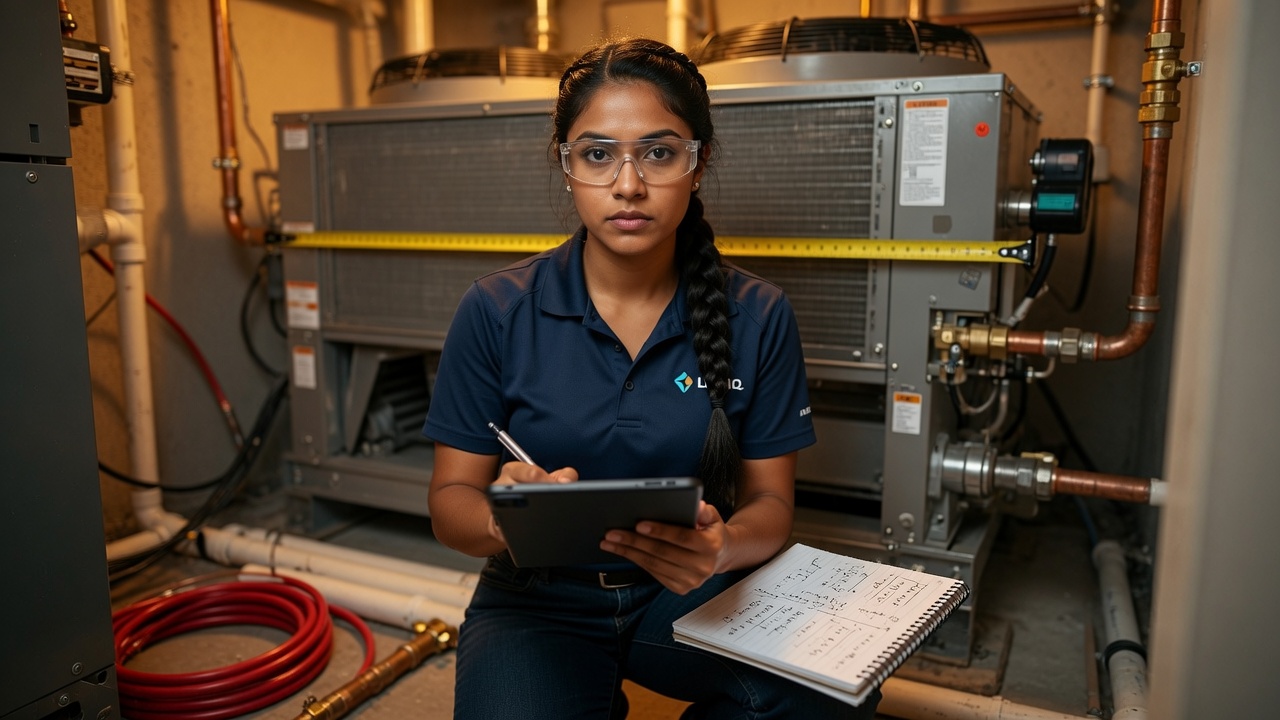

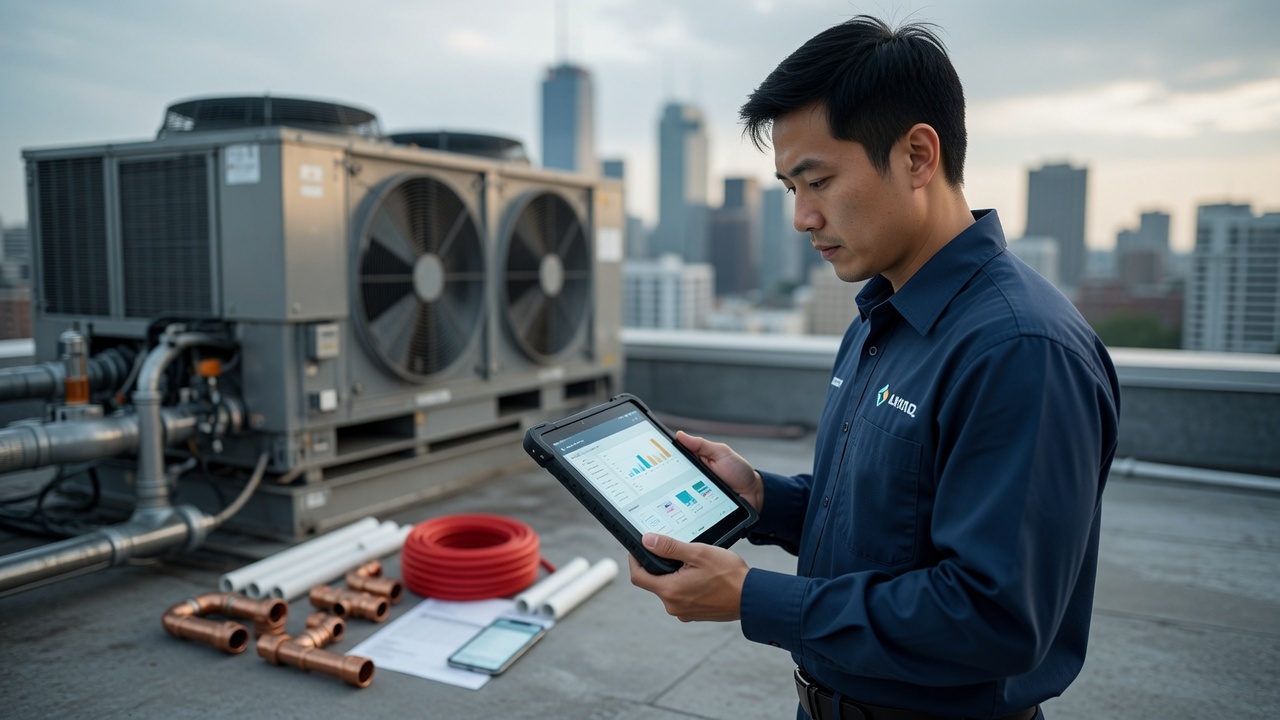
The HVAC industry has a bidding problem.
Not a "we don't know how to bid" problem. A speed problem. A consistency problem. A "the first contractor to send a professional estimate usually wins the job" problem.
The average HVAC contractor takes 2–4 hours to build a comprehensive bid for a system replacement. Load calculations, equipment selection, ductwork modifications, permits, labor estimates — it adds up. And during peak season, when you're running 6–8 service calls a day, those bids pile up faster than you can write them.
The result: bids go out late, customers get impatient, and the shop down the road — the one with the faster process — wins the work.
HVAC bidding software powered by AI is changing this equation. Not by replacing your expertise, but by eliminating the manual work that slows you down.
What's Broken About Traditional HVAC Bidding
The standard HVAC bid process looks something like this:
- Site visit: Measure the space, assess existing equipment, note ductwork condition. (1–2 hours)
- Load calculation: Manual J, or your best approximation of one. (30–60 minutes)
- Equipment selection: Match the load to available units, check distributor pricing, compare SEER ratings. (30–45 minutes)
- Estimate assembly: Build the line-item bid — equipment, materials, labor, permits, disposal. (45–90 minutes)
- Review and send: Format it professionally, double-check the math, email or print. (15–30 minutes)
Total: 3–5 hours per bid. During a shoulder season, that's manageable. During a July heatwave when your phone is ringing every 15 minutes? That's a backlog that costs you jobs.
The bottleneck isn't the site visit — you need eyes on the existing system. It's everything after. The calculations, the pricing lookups, the assembly of the estimate. That's where AI-powered HVAC bidding software eliminates hours of manual work.
How AI Changes Each Step
Load Calculations in Seconds
Manual J load calculations are the foundation of a proper HVAC bid. They're also time-consuming to do manually. AI tools can process square footage, insulation values, window count, orientation, and climate zone data to generate a load calculation in seconds — not the 30–60 minutes a manual process takes.
The calculations still follow the same ACCA Manual J methodology. The AI doesn't invent new physics. It just runs the numbers faster and catches errors (like forgetting to account for south-facing windows) that humans miss when they're rushed.
Equipment Matching with Current Pricing
Once the load is calculated, AI can match it to available equipment from your preferred manufacturers — Carrier, Trane, Lennox, Daikin, Goodman — at current distributor pricing. No more flipping through catalogs or calling your rep for a quote on a 3-ton 16 SEER2 heat pump.
The system knows your markup, your preferred brands, and your equipment tier preferences. It presents options — good/better/best — so you can give the customer choices without building three separate bids manually.
Voice-Driven Bid Assembly
Here's where HVAC bidding software gets genuinely transformative: voice input.
You're standing in the customer's basement, looking at a 20-year-old furnace. Instead of scribbling notes and building the bid later, you say: "Quote a 3-ton Carrier 16 SEER2 heat pump, replacing existing gas furnace. New line set, 35-foot run. Disconnect and dispose of old unit. New thermostat, Ecobee Premium. Pull the permit."
The system builds the bid while you're still on-site. Equipment at today's price. Labor at your rates. Markup applied. The customer can have a professional estimate in their inbox before you're back in the truck.
Speed wins jobs. When the homeowner is getting three quotes and yours arrives first — formatted professionally, with clear line items and financing options — you've already won the psychological advantage.
Real-Time Margin Visibility
Traditional bids are guesses wrapped in math. You estimate materials, estimate labor, add your markup, and hope the margin holds.
AI-powered tools track your actual costs against the bid in real time. Material prices update automatically. Labor hours are tracked as the job progresses. You know your margin on day one of the install, not three weeks later when the invoice is paid.
This changes how you bid, because you can see which job types consistently hit your margin targets and which ones don't. Over time, your bids get more accurate, your margins improve, and you stop taking jobs that look profitable on paper but aren't in practice.
What to Look for in HVAC Bidding Software
Not all AI tools are built equal. For HVAC contractors, the requirements are specific:
-
Understands HVAC terminology: Tonnage, SEER2 ratings, refrigerant types, ductwork specifications. Generic contractor tools can't handle trade-specific bid assembly.
-
Load calculation integration: Manual J support, or at minimum, rule-of-thumb calculations that account for climate zone and building characteristics.
-
Multi-option bids: Customers expect good/better/best choices. Your tool should generate all three from a single input.
-
Works on a phone: You're on-site, not at a desk. The tool needs to run on mobile, work by voice, and handle intermittent connectivity.
-
Current equipment pricing: Distributor pricing, not MSRP. Updated regularly enough to reflect the last price increase from your manufacturer.
The Bottom Line
The HVAC bidding process hasn't changed much in 30 years. The tools are finally catching up.
AI doesn't replace your knowledge of systems, your diagnostic skills, or your customer relationships. It replaces the hours of manual calculation and estimate assembly that slow you down during the seasons when speed matters most.
The contractors who adopt AI-powered HVAC bidding software in 2026 will bid faster, bid more accurately, and win more work. The ones who don't will keep losing jobs to the shop that sends the estimate first.
Also see: BTU Calculations Simplified: A Field Tech's Guide | For HVAC Contractors